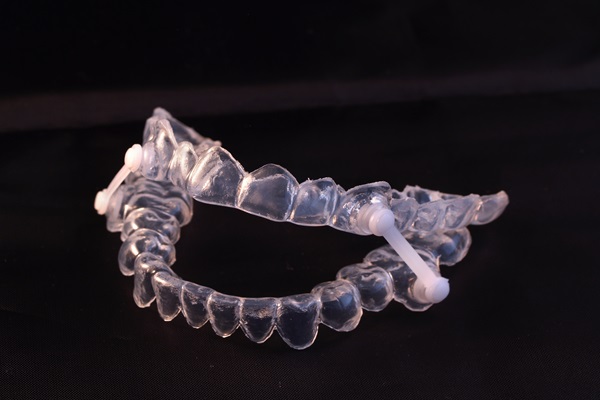
Wondering how oral appliances can help treat sleep apnea? Oral appliance therapy tends to be the initial treatment when someone is diagnosed with this serious sleeping disorder. Since there are different types of oral appliances, it is essential to choose the right kind.
Dental sleep apnea treatment
Dental treatment is a popular way to address sleep apnea, as dentists are qualified to diagnose and treat the condition. The main reason why sleep apnea treatment from a dental professional is so popular is that oral appliance therapy is a non-invasive option. Other treatment options include taking medications, using a CPAP machine, undergoing certain medical procedures, and undergoing surgery. However, oral appliances are easy to use, pain-free, and can do wonders for those suffering from sleep apnea.
According to WebMD, dental devices can help keep the airway open while sleeping, as dentists with special expertise in treating sleep apnea can custom-design them.
How dental oral appliance therapy helps sleep apnea patients
The information below explains how oral appliance therapy works to help those diagnosed with this serious sleeping disorder. The overall goal is to keep the patient's airways open while sleeping, allowing them to breathe more easily. This is why oral appliances focus on preventing the jaw and tongue from blocking one's airway.
It keeps the jaw in a forward position
Dental oral appliance therapy helps keep one's jaw in a forward position. This allows the jaw to be positioned in a way that supports a more open airway, allowing those diagnosed with sleep apnea to breathe more easily. The focus is on repositioning the lower jaw so it somewhat protrudes past its regular position, allowing for a more open airway. This type of oral appliance therapy uses mandibular repositioning appliances, which are custom-made for every patient.
It keeps the tongue in the front part of the mouth
Oral appliances also help keep a patient's tongue in the front of their mouth. When the tongue is pulled more to the front part of the mouth, it prevents it from falling into the back part of the mouth, which can block the airway, thus resulting in sleep apnea. Oral appliances that focus on keeping the tongue in the front of a patient's mouth often include using a mandibular repositioning appliance, which also focuses on keeping the jaw in a forward position. Another option is using a tongue retaining device, which only focuses on positioning the tongue.
To conclude
Now that it is understood that oral appliance therapy can help treat sleep apnea, those diagnosed with this serious disorder can take the next step. Since there are a few different oral appliance options, choosing the right one helps ensure sleep apnea sufferers can get the relief they seek. To receive professional guidance and make the right choice, a consultation appointment is necessary.
Are you considering Sleep apnea treatment in the Hollis area? Get more information at https://www.larochedental.com.
Check out what others are saying about our dental services on Yelp: Sleep Apnea in Hollis, NY.
Related Posts
Sleep apnea is a chronic disorder in which an individual briefly stops breathing while asleep. These breathing interruptions can cause the person to wake up, gasp for air or snore. Left untreated, this condition can lead to sleep deprivation and negatively affect overall health. Many people suffer from this sleep issue without knowing it. It is…
Dental oral appliances, also called mandibular advancement devices, can often treat sleep apnea and relieve symptoms. Understanding more about how dental oral appliances work for sleep apnea treatment and how they compare to other treatment solutions can help you decide if treatment is right for you. The days of relying upon your CPAP machine to treat…
Practicing preventive dentistry is an effective way to establish good oral health. Strict personal oral hygiene practices result in fewer dental problems. Strengthening these practices with regular dental appointments makes preventive dental care even more efficient. Preventive dentistry becomes even more effective by avoiding some bad habits.This habit increases the risk of chipping teeth. It…
Preventive dentistry can support your efforts to keep your mouth healthy, including practicing good oral hygiene, eating a balanced diet, and avoiding things that can damage your teeth and gums. Good oral hygiene goes a long way in helping to prevent common dental issues, such as tooth decay and gum disease, but sometimes it is…